 4.8
4.8


What Happens in a Driving Test? Everything You Need to Know
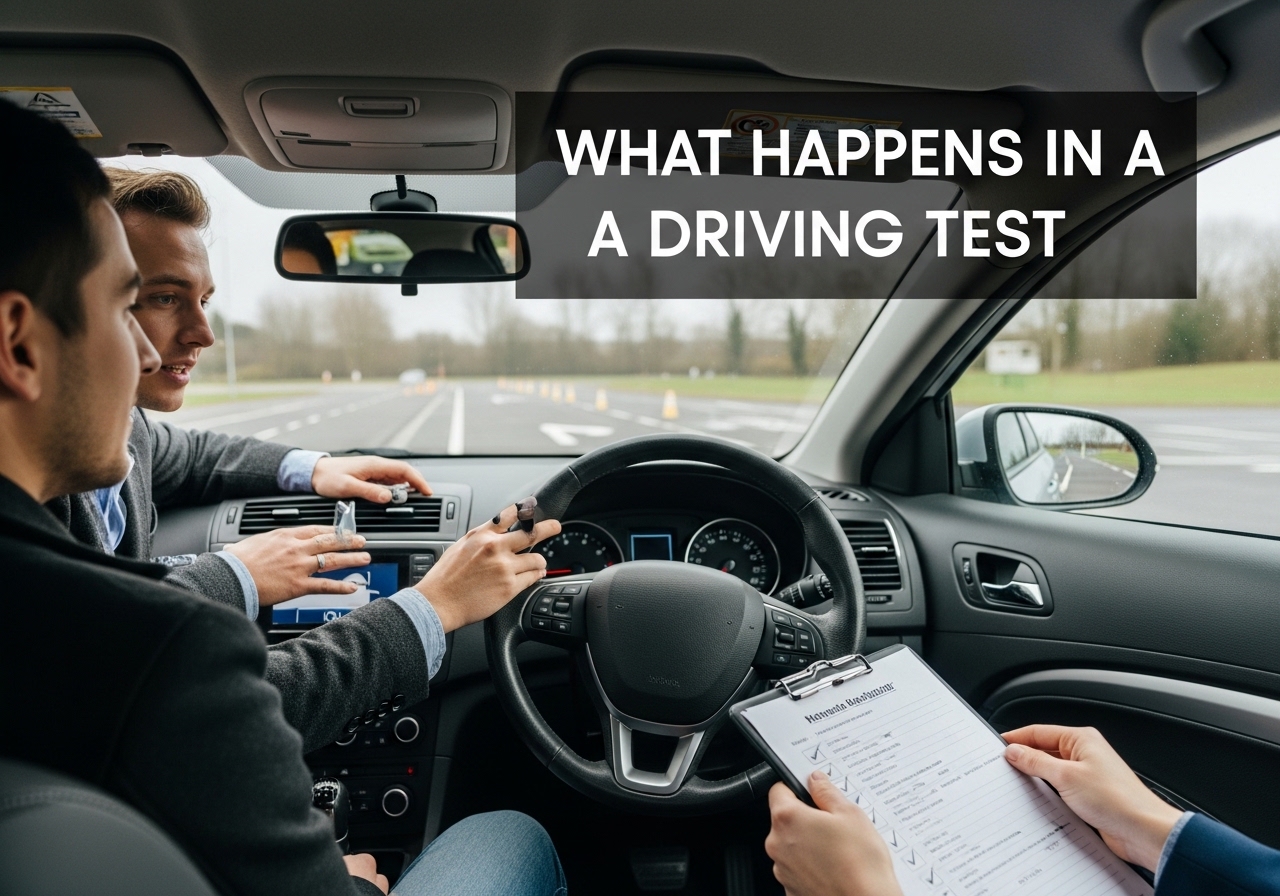
The UK practical driving test checks whether a learner can drive safely and independently on public roads. The test usually lasts around 40 minutes and follows DVSA rules. Examiners assess observation, control, decision-making, and road awareness before giving the result at the end. Many learners prepare through structured lessons with Suja Driving School before booking their test.
What Happens Before the Driving Test Starts
Before driving begins, the examiner carries out a few basic checks to confirm the learner is ready for the test.
- An eyesight check where you read a number plate from 20 metres
- One “tell me” vehicle safety question before driving
- Identity checks using your provisional licence
Learners often revise road rules beforehand using resources like the UK road signs guide and check training availability across areas covered.
Ready to Pass First Time?

What Happens During the Driving Test
During the test, you will drive on different types of roads including residential streets, junctions and main roads while following the examiner’s directions.
- Normal driving on public roads
- Observation at junctions and roundabouts
- Safe use of mirrors, signals and speed control
Understanding traffic behaviour helps learners during lessons such as regular driving courses or flexible pay-as-you-go driving lessons.
What Is Independent Driving?
Independent driving forms part of the practical test and normally lasts about 20 minutes. It checks whether learners can follow directions safely without constant instruction.
- Directions are given through sat nav or road signs
- The examiner still provides guidance if needed
- Safe decision-making is the main focus
Learners often revise junction awareness, lane discipline and systems like the contraflow traffic system to build confidence.
Reversing Manoeuvres and Emergency Stop
During the practical test, you will be asked to complete one reversing manoeuvre to demonstrate vehicle control.
- Parallel parking
- Bay parking
- Pulling up on the right and reversing
Some tests may also include an emergency stop. Many learners practise these through guides such as manoeuvres in the driving test or intensive training like driving crash courses in Manchester.
What Happens When the Test Ends
At the end of the test, the examiner tells you the result immediately and explains any faults recorded during the drive.
- You receive feedback about driving performance
- Results are also sent by email
- If successful, you receive a pass certificate
Learners who need another attempt can review faults and book their practical driving test again while reviewing how many minors cause a fail.
Need to pass your test fast?
Frequently Asked Questions
How long does a UK driving test take?
A standard UK car driving test usually lasts around 40 minutes. This includes the eyesight check, vehicle safety questions, general driving, independent driving, and one manoeuvre.
How many faults are allowed in a driving test?
You can have up to 15 driving faults (minors) and still pass the test. However, one serious fault or dangerous fault results in an immediate fail.
What are the “show me, tell me” questions?
These questions test basic car safety knowledge.
The “tell me” question is asked before driving, while the “show me” question is asked during the drive.
Do all driving tests include sat nav?
Not always. Independent driving may involve following a sat nav or road signs provided by the examiner.
What manoeuvres are included in the test?
You will complete one reversing manoeuvre, which could be parallel parking, bay parking, or pulling up on the right and reversing.
What happens if you fail the driving test?
If you fail, the examiner explains the faults and sends a result report. You must wait at least 10 working days before booking another test.
Can I drive immediately after passing?
Yes. Once you pass, you can drive immediately as a full licence holder, provided the vehicle is insured.
How many driving lessons do learners usually need before the test?
The DVSA estimates many learners need around 45 hours of professional lessons plus private practice. Reading about how many driving lessons are needed can help learners plan their training.



 Peter House, Oxford St,

