 4.8
4.8


Guide to Using Car Sidelights: When Should You Use Them in the UK?
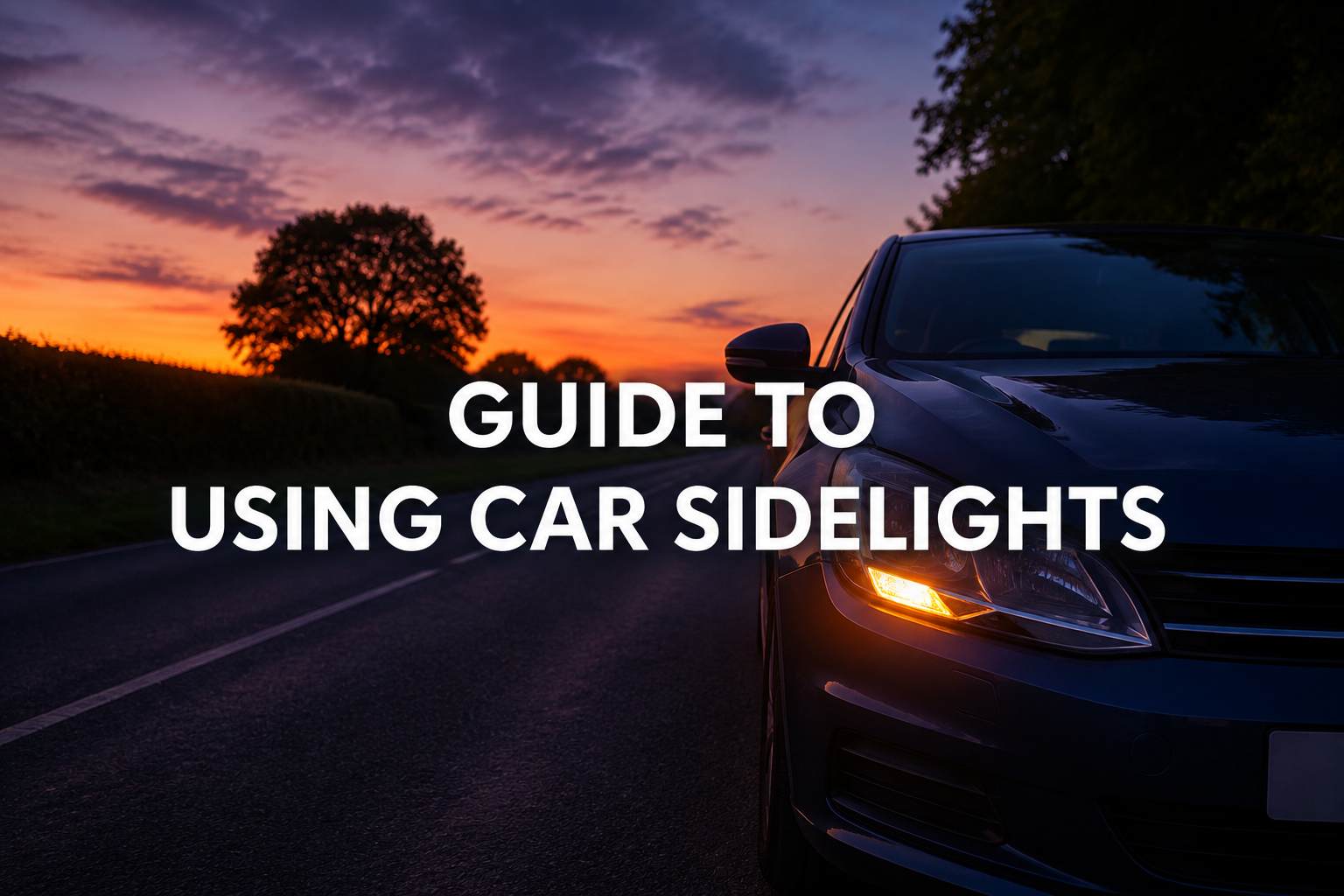
Car lights play an important role in keeping you visible and helping other road users understand your position. While most drivers know about dipped headlights and full beam, sidelights are often misunderstood.
Many learners are unsure when sidelights should be used, whether they are suitable for driving at night and how they differ from other vehicle lighting options. Understanding these basics can help you follow UK road rules and make safer decisions in different situations.
What Are Sidelights on a Car?
Sidelights are small lights positioned at the front and rear of a vehicle. They are designed to make your car easier to see rather than fully illuminate the road ahead.
Unlike dipped headlights, sidelights do not provide enough brightness for normal night-time driving. They mainly show the presence and width of your vehicle to other road users, especially when your car is stationary or visibility is slightly reduced.
Many modern vehicles also refer to sidelights as parking lights because they are commonly used when leaving a vehicle parked in certain situations.
When Should You Use Car Sidelights?
Sidelights are mainly used when your vehicle needs to remain visible but full headlights are not required.
You should use sidelights when:
- Your vehicle is parked on a road or lay-by with a speed limit above 30 mph during hours of darkness.
- Your vehicle is parked in poor visibility conditions where it could be difficult for others to see it.
- Visibility is reduced but conditions do not require stronger lighting.
The Highway Code states that vehicles should display sidelights and rear registration plate lights between sunset and sunrise. It also provides specific requirements for using lights when parked on roads with higher speed limits.
Are Sidelights the Same as Dipped Headlights?
No, sidelights and dipped headlights serve different purposes.
Sidelights are mainly for visibility, while dipped headlights are designed to help you see the road ahead. Dipped headlights produce a stronger beam and are the usual choice when driving at night or during poor weather conditions.
A common mistake among learner drivers is using sidelights when they actually need dipped headlights. If visibility is poor or you cannot clearly see the road ahead, sidelights alone are unlikely to provide enough illumination.
Choosing the correct lighting depends on the conditions around you, not simply the time of day.
Need to pass your test fast?

Can You Drive Using Only Sidelights at Night?
In some situations, sidelights may be legally acceptable on roads with street lighting and lower speed limits, but they are not normally the best option for safe driving.
Most drivers should use dipped headlights when travelling at night because they improve visibility and help other road users notice the vehicle more easily.
If you are driving on an unlit road, rural route or an area with limited visibility, relying only on sidelights can reduce your ability to identify hazards early.
When Should You Avoid Using Only Sidelights?
Sidelights should not replace headlights when conditions require stronger lighting. They are not designed to help you see hazards, pedestrians or changes in the road ahead.
You should avoid relying only on sidelights when:
- Driving on dark roads without street lighting.
- Visibility is seriously reduced due to fog, heavy rain or mist.
- You need to clearly see hazards at a greater distance.
- Other road users may struggle to notice your vehicle.
When visibility becomes seriously reduced, headlights are required rather than just sidelights. The Highway Code advises drivers to use headlights when they cannot see clearly for an extended distance due to poor conditions.
Do You Need Sidelights When Parking?
Parking situations are one of the most common times when sidelights are required.
If you park on a road or lay-by where the speed limit is above 30 mph, you must normally display parking lights during darkness. This helps approaching drivers recognise a stationary vehicle and avoid collisions.
On roads with a speed limit of 30 mph or less, requirements can differ depending on how and where the vehicle is parked. Drivers should always consider their location, surrounding traffic and whether the vehicle is clearly visible.
Can You Leave Sidelights On for a Long Time?
Sidelights are designed to use less power than headlights, which means they are suitable for longer periods when a vehicle needs to remain visible.
However, leaving any lights switched on unnecessarily can eventually affect your battery, especially if the vehicle remains unused for an extended period.
Before leaving your car, always check that the correct lights are being used and switch off unnecessary electrical features.
Common Sidelight Mistakes Made by Learner Drivers
Lighting mistakes are common among new drivers because different situations require different decisions.
Some learners may forget to turn lights on when visibility reduces, while others may use sidelights instead of headlights when driving in darker conditions.
Other common mistakes include:
- Forgetting to switch lights off after parking.
- Assuming automatic lights always respond correctly in every situation.
- Confusing sidelights with daytime running lights.
- Using sidelights because they feel less bright and safer.
Developing good lighting habits during lessons helps learners become more confident and prepared for independent driving.
How Can Driving Lessons Improve Your Understanding of Car Lights?
Knowing how to operate vehicle controls is an important part of becoming a safe driver. At SUJA Driving School, learners can build practical experience with essential skills, including understanding road conditions, vehicle controls and safe decision-making.
Professional lessons allow learners to practise different driving environments, including night-time journeys and changing weather conditions. For learners who prefer a structured approach, regular driving courses can provide consistent progress.
Those who want to improve their skills within a shorter timeframe can explore driving crash courses in Manchester, where focused training can help develop confidence behind the wheel.
Which SUJA Driving Course Could Help You Progress?
Every learner has different goals, experience levels and schedules. Choosing the right course can make learning more comfortable and effective.
SUJA Driving School provides flexible options, including the Guaranteed Pass Course for learners looking for focused preparation and the Speedster Course for those wanting a more intensive learning experience.
Learners who prefer flexibility can choose pay-as-you-go driving lessons. You can also compare available packages and costs through the driving lesson prices page.
The right training approach can help learners understand not just how to pass their test, but how to make safer decisions throughout their driving journey.
Final Thoughts on Using Sidelights Correctly
Sidelights may seem simple, but using them correctly is an important part of responsible driving. They help improve vehicle visibility in certain situations but should not be confused with headlights.
Understanding when to use sidelights, dipped headlights and other vehicle lighting options allows drivers to respond better to changing road conditions.
With proper knowledge and practical experience, learners can develop stronger awareness and become safer, more confident drivers.
Frequently Asked Questions
What are sidelights used for on a car?
Sidelights help make your vehicle visible to other road users. They are mainly used when parked in certain situations or when additional visibility is needed without using full headlights.
Can I drive at night with only sidelights?
Sidelights are generally not suitable for normal night driving because they do not illuminate the road properly. Dipped headlights are usually needed to improve visibility and safety.
Do sidelights use less battery than headlights?
Yes, sidelights typically use less power than headlights. However, leaving any vehicle lights on for long periods can still drain the battery.
When should I turn my sidelights on?
You should use sidelights when your vehicle needs to remain visible, particularly when parked on certain roads at night or during reduced visibility conditions.
Are parking lights and sidelights the same thing?
Yes, parking lights are another name commonly used for sidelights. They are designed to show the presence of a parked vehicle to other road users.


 Peter House, Oxford St,

